




How Water Fountain Lights Enhance the Functionality of Outdoor Ponds
Outdoor ponds are beautiful landscape features that create a peaceful and inviting atmosphere. While fountains add movement and improve water circulation during the day, proper lighting transforms these water features into stunning nighttime attractions. Modern lighting solutions not only improve visibility but also highlight the movement of water, creating an elegant visual display after sunset. In addition to enhancing appearance, fountain lighting can improve safety and extend the usability of outdoor spaces well into the evening.
Whether installed in residential gardens, commercial landscapes, parks, or recreational spaces, water fountain lights offer both decorative and practical benefits. Choosing the right lighting system and maintaining it properly can significantly improve the overall appeal and functionality of any pond or fountain.
What Are Water Fountain Lights?
Water fountain lights are specially designed lighting fixtures that illuminate fountains, waterfalls, and other water features. Most modern systems use LED technology because of its energy efficiency, long lifespan, and ability to produce bright, vibrant illumination.
These lights are commonly installed:
- Around fountain nozzles
- Below the water surface
- Along pond edges
- Around waterfalls
- Near decorative water features
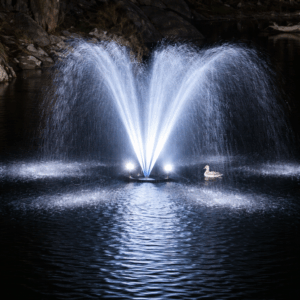
Proper placement allows the light to interact with flowing water, creating eye-catching reflections and dynamic visual effects.
Benefits of Installing Fountain Lighting
Lighting provides much more than aesthetic value. It also contributes to the overall enjoyment and functionality of outdoor water features.
Some of the primary benefits include:
- Improved nighttime visibility
- Enhanced landscape appearance
- Greater visual depth and movement
- Increased outdoor safety
- Extended enjoyment after dark
- Energy-efficient operation with LED technology
Well-designed lighting systems can completely transform the appearance of a pond while complementing the surrounding landscape.
Types of Water Fountain Lights
Several lighting options are available depending on the size and style of the fountain.
Underwater LED Lights
These fixtures are installed beneath the water surface and direct light upward through the fountain spray. This creates dramatic illumination while highlighting water movement.
Color-Changing LED Lights
RGB LED systems allow users to switch between multiple colors or create dynamic lighting effects for different occasions.
White LED Lights
White lighting offers a clean, elegant appearance and is commonly used in residential gardens and public landscapes where a natural look is preferred.
Solar-Powered Lights
Solar-powered lighting systems provide an energy-efficient option for smaller decorative fountains, especially in locations with adequate sunlight.
Choosing the Right Lighting System
Selecting suitable lighting depends on several important factors.
Consider the following:
- Pond size
- Fountain height
- Desired brightness
- Beam angle
- Energy efficiency
- Waterproof rating
- Installation requirements
Matching the lighting system to the fountain design helps achieve balanced illumination while avoiding excessive glare.
Installation Best Practices
Proper installation ensures both safety and long-term performance.
Recommended practices include:
- Position lights below the spray pattern.
- Use waterproof electrical connections.
- Install low-voltage lighting where appropriate.
- Secure cables to prevent movement.
- Follow manufacturer installation guidelines.
- Test lighting angles before final placement.
Correct positioning helps maximize illumination while minimizing shadows and uneven lighting effects.
Maintenance Tips for Long-Term Performance
Like any outdoor equipment, fountain lighting benefits from regular maintenance.
Routine maintenance should include:
- Cleaning light lenses
- Removing mineral deposits
- Inspecting electrical connections
- Checking waterproof seals
- Replacing damaged fixtures
- Testing lighting performance periodically
Simple maintenance helps preserve brightness and extends the lifespan of the lighting system.
Combining Lighting with Water Movement
The visual impact of a fountain increases significantly when lighting is combined with flowing water. As illuminated water droplets move through the air, they create reflections, depth, and constantly changing visual patterns.
The effectiveness of **water fountain lights is often enhanced when paired with properly designed fountain nozzles that create symmetrical spray patterns. Different spray styles produce unique lighting effects, allowing landscape designers to create customized nighttime displays. Continuous water circulation also improves pond health by increasing oxygen levels and reducing stagnation while enhancing the overall visual experience.
Where Fountain Lights Are Commonly Used
These lighting systems are suitable for a wide variety of outdoor environments, including:
- Residential garden ponds
- Commercial landscapes
- Hotels and resorts
- Public parks
- Golf courses
- Botanical gardens
- Decorative lakes
- Community entrances
Their versatility makes them an excellent addition to nearly any outdoor water feature.
Conclusion
Outdoor lighting plays an important role in maximizing the beauty and functionality of ponds and fountains. By highlighting flowing water, improving nighttime visibility, and creating attractive visual effects, water fountain lights help transform ordinary landscapes into elegant outdoor spaces. Selecting the appropriate lighting system, following proper installation practices, and performing regular maintenance all contribute to long-lasting performance and enhanced outdoor enjoyment. They also pair exceptionally well with a floating pond fountain. With thoughtful planning and quality lighting design, pond owners can enjoy attractive, well-illuminated water features throughout the year.
Author

