


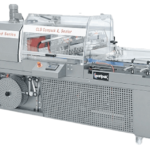


How an Automatic Side Sealing Machine Improves Packaging Operations
Modern packaging lines increasingly depend on automation to maintain consistent output while reducing repetitive manual tasks. Side sealing technology is particularly useful for operations that need continuous wrapping, reliable seals, and compatibility with different product dimensions. Understanding how an automatic side sealing machine works and which features matter can help manufacturers evaluate whether automated side sealing fits their production requirements.
What Is Side Sealing?
Side sealing is a packaging process in which film is continuously sealed along the length or side of a product. Unlike some fixed-cycle packaging systems, side seal equipment can accommodate products with varying lengths while maintaining a continuous sealing process.
An automatic side sealing machine typically combines product feeding, film handling, sealing, and package discharge into a coordinated operation. Depending on the system, additional equipment such as a heat-shrink tunnel can be integrated into the packaging line.
Maripak’s side-sealing equipment includes intermittent, continuous-motion, hybrid, and combination systems designed for different production requirements.
Consider Product Dimensions First
Product dimensions should be evaluated before selecting packaging equipment. Width, height, length, weight, and shape can all affect the appropriate machine configuration.
Standard systems may be suitable for common product sizes, while unusually large or tall products may require equipment with greater clearance or a customized configuration. For example, Maripak’s Impack Hybrid 60 provides a 16-inch seal-bar height and is designed for taller products.
Understanding the complete product range helps determine whether a standard machine can accommodate production requirements or whether specialized equipment is more appropriate.
Compare Intermittent and Continuous Operation
Side sealers generally use different operating approaches depending on production volume and product characteristics. Intermittent systems pause during portions of the sealing cycle, while continuous-motion systems maintain product movement through the sealing process.
Continuous systems can be useful for high-throughput applications where maintaining a steady product flow is important. Maripak’s Impack Pro-Motion range, for instance, is designed as a fully automatic continuous-motion side-sealing system, with configurations capable of reaching approximately 98 feet per minute under specified conditions.
The right operating method depends on product dimensions, required throughput, film type, infeed design, and the desired packaging workflow.
Evaluate Film Compatibility
Packaging film is another important consideration. Different products and applications may require different film characteristics for strength, appearance, sealing performance, and shrink behavior.
Some automated side-sealing systems are designed to accommodate multiple film types. The Impack Hybrid series, for example, supports POF, PP, and PE films and incorporates adjustable sealing pressure and controlled film movement.
Before installation, manufacturers should confirm the film specifications recommended for the selected equipment and test the combination of film, product, temperature, and sealing speed.
Look at Automation and Controls
Automation can reduce repetitive operator involvement and improve consistency across production runs. Useful features can include automatic length detection, programmable package settings, touchscreen controls, temperature management, and conveyor-speed adjustments.
Maripak’s side-sealing systems include automatic length detection and adjustable package parameters, while certain models provide touchscreen interfaces for recalling and changing production settings.
These features can be particularly useful when a facility packages several product types and needs to change settings without lengthy manual adjustments.
Consider Integration With Existing Equipment
A side sealer rarely operates in isolation. It may need to connect with conveyors, product feeders, heat tunnels, labeling equipment, or other automated packaging components.
Before selecting an automatic side sealing machine, examine the existing production line and identify connection points, conveyor heights, available floor space, electrical requirements, and product-flow direction.
Custom-built equipment can be useful when standard machine dimensions or configurations do not align with an existing production environment. Maripak’s custom solutions include specialty fully automatic continuous side-sealing equipment designed around specific customer applications.
Plan for Maintenance and Operator Training
Automation does not eliminate the need for maintenance. Sealing components, film-handling systems, conveyors, sensors, and other moving parts require regular inspection and adjustment.
Operators should also understand startup procedures, temperature settings, film loading, product alignment, emergency controls, and basic troubleshooting. Proper training can help prevent avoidable interruptions and maintain consistent package quality.
Conclusion
Selecting automated side-sealing equipment requires consideration of product dimensions, production speed, film compatibility, controls, integration requirements, maintenance, and available floor space. For businesses exploring customized packaging automation, Maripak USA offers side-sealing systems and custom-built equipment designed around different application requirements. Matching machine capabilities with the actual packaging process can help create a more consistent and efficient workflow.
Author

