




How Do Shrink Wrappers Improve Modern Packaging Efficiency?
Packaging operations increasingly depend on equipment that can provide consistent results while handling different product sizes, materials, and production volumes. Shrink wrappers are widely used in industrial packaging because they combine film application, sealing, and heat shrinking into a controlled process. The technology can help create secure packages, organize multipacks, and prepare products for storage or transportation. Understanding how the equipment works and where it fits can help manufacturers choose an appropriate packaging approach.
What Are Shrink Wrappers and How Do They Work?
A shrink wrapper uses heat-shrinkable film to enclose a product, group of products, or load. Depending on the system, the film may first be sealed around the item before passing through a heat tunnel. Controlled heat causes the film to contract around the package, creating a tighter covering.
The process generally involves three stages: product positioning, film sealing, and heat shrinking. Equipment configuration varies according to the product dimensions, film type, desired production rate, and level of automation. Some systems are designed for manual or semi-automatic operation, while continuous-motion equipment can support high-volume production.
Modern shrink wrappers may also be integrated with conveyors, product feeders, collating systems, and heat tunnels. This allows packaging operations to create a continuous workflow rather than treating wrapping as an isolated manual task. Industrial systems can therefore support greater consistency in package formation and production scheduling.
Where Are Shrink Wrappers Commonly Used?
Different industries use shrink wrapping for different packaging objectives. Food and beverage manufacturers, for example, may use shrink film to group bottles, cans, cartons, or other packaged goods. Consumer-product manufacturers can use the process for multipacks, retail products, and bundled items.
Industrial applications extend beyond retail presentation. Packaging operations can use shrink wrappers to reduce product movement, protect surfaces from dust or handling, and create a compact package for transportation. E-commerce and fulfillment operations may also use shrink packaging when products require additional containment before shipment.
What Are the Main Types of Wrapping Equipment?
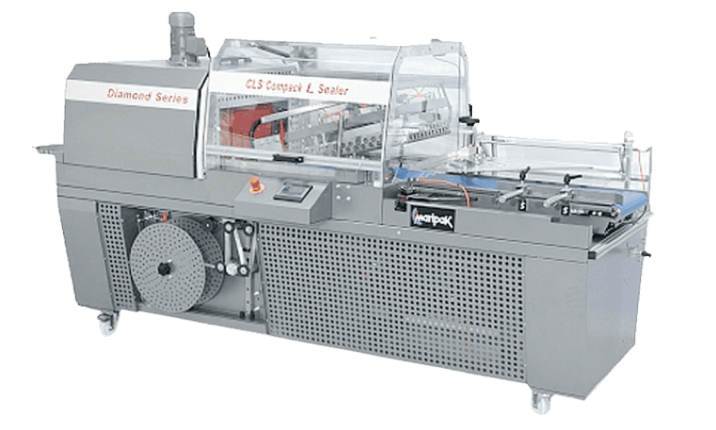
Equipment selection depends heavily on the product and production environment. L-sealers are commonly used to seal film around individual products, while side sealers can continuously seal film along the product’s side. Bundling systems are designed to group multiple products together before or during the wrapping process.
For higher-volume operations, automated equipment can combine feeding, sealing, and shrinking functions. Some industrial systems use automatic product collation before shrink wrappers, while others use continuous sleeve wrapping for products requiring a specific package format.
How Do Shrink Wrappers Support Packaging Efficiency?
Production efficiency is not determined solely by maximum machine speed. Consistent sealing, reliable film handling, appropriate heat distribution, and reduced manual intervention can all affect overall output.
When packaging equipment is properly matched to the application, operators can achieve more repeatable package dimensions and reduce variation between production cycles. Automated feeding and continuous operation can also minimize unnecessary handling between packaging stages.
What Should Businesses Consider Before Choosing Equipment?
Product characteristics should be the starting point. Manufacturers need to consider package dimensions, weight, shape, required film type, production volume, and whether products will be packaged individually or in groups.
The desired automation level is another important consideration. A lower-volume operation may not require the same automated configuration as a high-throughput production line. Conversely, businesses expecting production growth may need equipment that can accommodate increased volume without creating a major bottleneck.
Film compatibility and heat requirements also matter. Different films respond differently to temperature and airflow, so equipment settings should be appropriate for the selected packaging material. Operators should also consider available floor space, conveyor configuration, electrical requirements, safety features, and maintenance access.
Conclusion
Modern packaging requires more than simply placing film around a product. The right equipment must match the product format, production volume, film characteristics, automation requirements, and available workflow. Understanding sealing methods, heat tunnel requirements, maintenance needs, and production objectives makes the selection process more practical. For organizations researching equipment and technical resources, Maripak USA provides information covering industrial wrapping systems, heat tunnels, equipment support, and parts resources.
Author

