
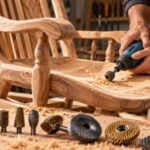





Rotary Carving Tools for Wood: Key Types, Uses, and Project Ideas
Carving wood by hand takes patience, and power tools can extend what a maker can accomplish. Understanding the different tool shapes, abrasive styles, and compatible power tools helps carvers choose with confidence. Among the available options, rotary carving tools for wood stand out for their range, since they handle everything from rough shaping to fine surface detail. This guest post explains how these tools work, which forms suit which tasks, and how they apply to real projects, including furniture pieces. Whether you are new to power carving or looking to expand your toolkit, the sections below offer a practical overview.
How These Tools Work
Rotary carving tools are abrasive cutters that spin on a power tool and remove wood as they turn. Burrs mount on a rotary tool, shaping wheels mount on an angle grinder, and hand rasps offer a no-power option for hand shaping. Many cutters are made with tungsten carbide, a material valued for durability. Some designs combine two tooth styles in a range of coarseness grades, balancing material removal with surface quality. They can also cut with or against the grain, which gives carvers steady control.
Common Tool Types
Each shape serves a different purpose. Burrs add fine details, textures, and decorative touches. Shaping wheels remove material quickly and help form flowing shapes. Contour wheels create concave hollows, rounded edges, and sculpted recesses. Hand rasps allow multi-directional control for refining and texturing by hand. Ready-made burr kits bundle several shapes, which gives newer carvers a simple way to explore different styles. Choosing among these forms is easier once the job is clear: rough removal calls for aggressive tools, while detail work calls for smaller burrs.
Materials and Applications
These cutters are not limited to wood. They also work on rubber, plastic, epoxy, fiberglass, soft stone, and foam, which broadens their use beyond the woodshop. Within woodworking, common applications include furniture making, chainsaw carving, scroll saw work, woodturning, functional carving, and sculptural art. When choosing rotary carving tools for wood, it helps to match the tool to the stage of the project. Early stages favor fast shaping, and later stages favor refinement and detail. Working in that order keeps the process efficient and the finish consistent.
Shaping Furniture Components
Furniture offers a good example of how different tools work together. Seats often need gentle hollows, which contour wheels are designed to create. Arms, legs, and rails call for rounded edges and flowing curves, which shaping wheels form efficiently. Smaller burrs then refine edges, add texture, and handle decorative details. Hand rasps provide a final pass to blend transitions by feel. Using rotary carving tools for wood in this sequence, from rough removal to finishing, produces comfortable, well-proportioned pieces.
Working Techniques
Technique matters as much as the tool. Light, steady passes keep control high. Moving the tool prevents deep spots from forming in one area. Switching to a finer grade near the end smooths the surface left by earlier passes. Testing a new shape on scrap wood first builds confidence.
Selecting the Right Setup
Compatibility matters as much as tool shape. Burrs need a rotary tool, while shaping and contour wheels need an angle grinder or another suitable power tool, and adapters and accessories can expand which tools a wheel will fit. Reviewing a mounting guide and a power-tool compatibility chart before buying avoids mismatches. Coarseness is the other key choice.
Conclusion
Power carving rewards a clear plan, and that plan starts with matching each tool to its task. Burrs, shaping wheels, contour wheels, and rasps each play a role from the first rough cuts to the final details. Projects such as rocking chair carving show how these tools work together, with contoured seats, curved rockers, and detailed spindles all calling for different shapes. With the right combination and a steady approach, carvers can turn raw lumber into finished, functional art.
Author

