



Machine Components: Selecting Materials, Fits, and Lubrication
Machine design is largely the art of choosing components that work together for years. The wrong material, fit, or lubricant turns a good design into a maintenance problem. This guide explains the main decisions involved in selecting machine components, from materials to tolerances.
What Counts as a Component
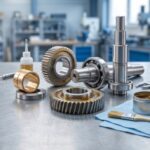
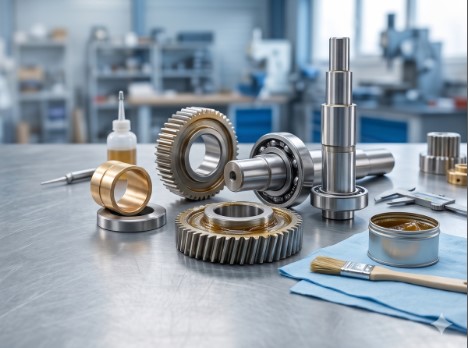
Components include any individual element of a machine: shafts, gears, bearings, couplings, fasteners, springs, seals, pulleys, brackets, and frames. Each performs a function, carries load, and interacts with neighbors.
The reliability of the whole machine depends on how well these elements match. Careful selection of machine components reduces vibration, noise, wear, and unplanned downtime.
Start With the Operating Conditions
Before choosing any component, define the conditions it must handle.
- Loads, including static, cyclic, and shock
- Speeds and duty cycle
- Temperature range
- Exposure to moisture, chemicals, or washdown
- Cleanliness requirements, such as food-grade surfaces
- Expected service life and maintenance access
These factors drive every choice that follows. Vague requirements lead to overdesign or early failure.
Materials
Material choice is the first big decision for machine components.
Steels
Carbon and alloy steels provide strength and wear resistance, and heat treatment can increase surface hardness. They suit shafts, gears, and structural parts but need protection from corrosion.
Stainless Steel
Stainless grades resist corrosion and suit sanitary or wet environments. Austenitic grades such as 304 and 316 are widely used, though they are not as hard as hardened carbon steel.
Aluminum
Aluminum is light and easy to machine, suiting brackets, guards, and moving parts where weight matters. It has lower strength and wear resistance than steel.
Bronze, Brass, and Engineering Plastics
Bronze and brass make good bushings and low-friction surfaces. Plastics such as nylon, acetal, and UHMW polyethylene provide quiet operation and wear resistance for guides and rollers.
Match the material to the stress and environment, then consider surface treatments such as plating, anodizing, or coatings.
Tolerances and Fits
Fits and tolerances decide how machine components behave together.
Tolerance defines how much a dimension may vary. Fits describe the relationship between mating parts, such as a shaft in a bearing bore.
- Clearance fits leave a gap so parts can move or be assembled easily
- Interference fits hold parts together by pressure, as with a press-fit bearing
- Transition fits fall between the two
Tighter tolerances cost more, so specify only what the function requires. Critical surfaces, such as bearing seats and seal journals, deserve close control. Other surfaces can be looser.
Surface Finish
Surface roughness affects friction, sealing, and fatigue life. Seal contact areas need a smooth, consistent finish, while bearing seats require precise geometry. Ask for finish specifications on drawings.
Surface hardness also matters. A hardened shaft under a seal lip lasts longer than an unhardened one.
Lubrication
Lubrication protects each of the moving machine components in an assembly.
Lubrication separates moving surfaces, reduces friction, and carries away heat. Failures often trace back to lubricant that is wrong, contaminated, or missing.
- Choose lubricant type and viscosity based on speed, load, and temperature
- Use the right quantity, since too much is as harmful as too little
- Set relubrication intervals based on operating conditions
- Keep lubricants clean and sealed in storage
- Avoid mixing incompatible greases
Good lubrication practice protects every moving component.
Standards and Interchangeability
Standard parts such as bearings, belts, fasteners, and couplings are available from multiple sources and follow published dimensions. Using standards simplifies replacement and reduces cost.
Custom parts are justified when standards cannot meet the need. Document them well with drawings, materials, and tolerances so they can be reproduced later.
Supplier and Documentation
For important items, ask suppliers for datasheets, material certificates, and inspection reports. Check lead times and minimum orders. A supplier who understands the application can suggest improvements.
Keep drawings, specifications, and purchase records in a central place. The time saved during a breakdown is considerable.
Designing for Maintenance
Serviceability is a design feature of well-chosen machine components.
- Make wear items easy to reach
- Use standard fasteners and tool sizes where possible
- Provide lubrication points that are accessible
- Add inspection windows or covers
- Include alignment features for reassembly
Components that are easy to service tend to be serviced. Components that are hard to reach tend to be ignored.
Conclusion
Strong designs result from clear requirements, appropriate materials, sensible tolerances, good lubrication, and thorough documentation. Teams that stock replacements should also track the machine parts that wear fastest so reorder decisions are based on evidence. Review your component choices whenever a failure repeats.
Author

