



Extra Space Storage: A Practical Way to Create More Room
Running out of space can happen faster than most people expect.
A growing family, a move, home renovation, business inventory, or simply years of collecting belongings can leave a house, apartment, or office feeling crowded. When closets are full and the garage can no longer hold another box, finding extra space becomes a real problem.
Extra space storage gives you somewhere secure to keep belongings that you do not need every day but are not ready to throw away or sell.
What Is Extra Space Storage?
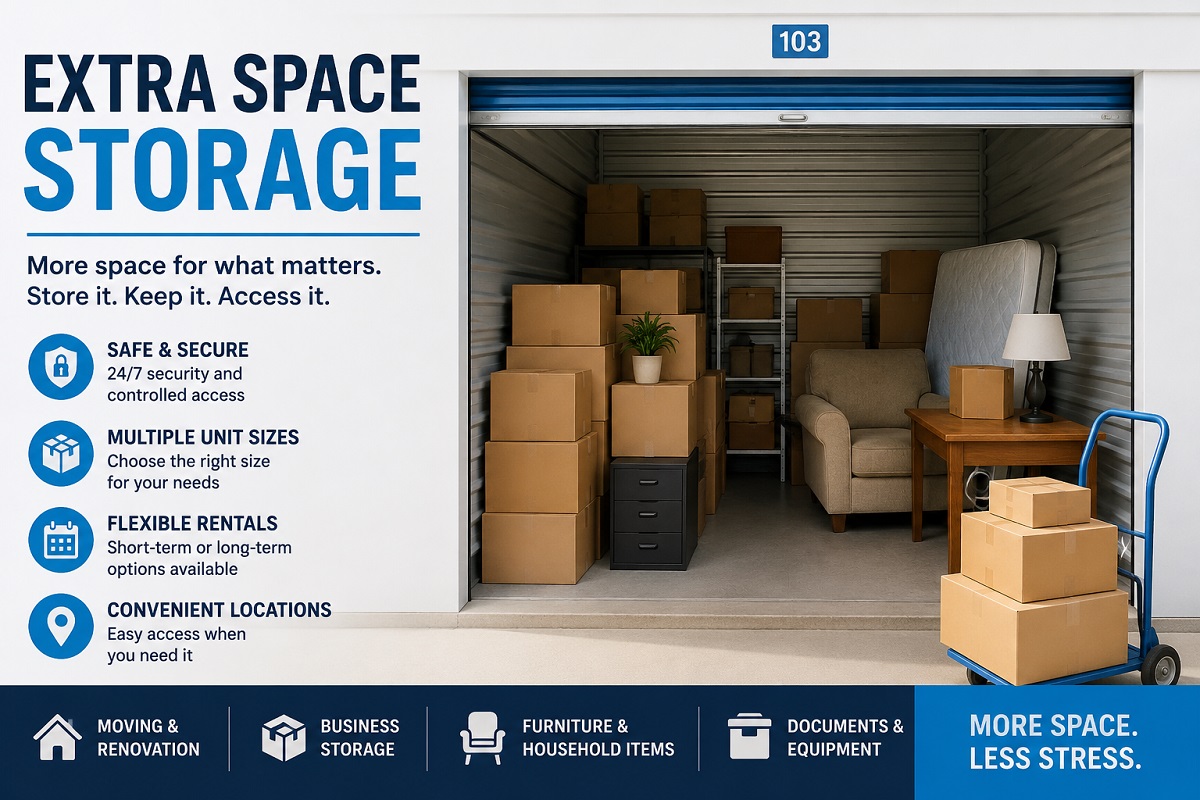
Extra space storage generally refers to renting a storage unit where you can keep personal or business belongings for a specific period. Depending on your needs, you may find small units for boxes and seasonal items or larger spaces for furniture, equipment, inventory, and other bulky belongings.
The idea is simple. Instead of filling every corner of your home or workplace, you move selected items into a separate storage space.
You still own your belongings. You simply create more room around you.
Why Do People Need Extra Storage Space?
Storage needs are different for everyone.
Some people need temporary space during a house move. Others want to store furniture while renovating. Business owners may need somewhere to keep extra stock without paying for a larger commercial property.
Common reasons include:
- Moving to a new home
- Downsizing to a smaller property
- Renovating or repairing a house
- Storing seasonal decorations
- Keeping furniture temporarily
- Managing business inventory
- Storing documents and equipment
- Creating more room at home
Sometimes, the biggest benefit is simply reducing clutter.
A crowded space can make everyday life more difficult. You may spend time moving things around just to find what you need. Using a separate storage unit can help you keep important belongings without allowing them to take over your living or working space.
Choosing the Right Storage Unit Size
One of the first decisions is choosing the right unit size.
A small unit may work well for boxes, documents, clothing, and a few personal items. Larger units are better suited for furniture, appliances, business supplies, or the contents of several rooms.
Before renting a unit, make a list of everything you plan to store.
This helps you avoid paying for more space than necessary. At the same time, choosing a unit that is too small can create problems when you start moving items inside.
Think about access as well. If you will need certain belongings regularly, leave enough room to walk through the unit and reach them.
Climate-Controlled Storage Can Matter
Some belongings need more protection than others.
Extreme temperatures and humidity can affect items such as wooden furniture, electronics, documents, photographs, artwork, and certain types of clothing. In these cases, climate-controlled storage may be worth considering.
For everyday household items that are less sensitive to temperature changes, a standard storage unit may be enough.
The right choice depends on what you are storing and how long you plan to keep it there.
Storage for Moving and Renovation
Moving is one of the most common reasons people rent extra storage space.
There can be a gap between leaving your old property and moving into your new one. A storage unit gives you a temporary place for your furniture and personal belongings during that period.
Renovations create a similar problem.
Furniture and other household items may need to be moved out of the way while work is being completed. Keeping them in another location can protect them from dust, paint, accidental damage, and constant moving from room to room.
It can also make the renovation process easier for everyone involved.
Extra Storage for Businesses
Storage is not only useful for homeowners.
Small businesses often run out of room as inventory, equipment, files, and supplies begin to accumulate. Renting additional storage can be a practical option when a larger office or warehouse is not necessary.
For example, an online seller may need space for seasonal inventory. A contractor may need somewhere to keep tools and equipment. A business may also use storage for archived documents or promotional materials.
The key is choosing a facility that provides suitable access and security for the type of items being stored.
Security Should Be a Priority
Price matters, but security should never be ignored.
Before choosing a storage facility, check what security measures are available. Depending on the location, this may include controlled access, security cameras, gated entry, individual unit locks, and on-site management.
You should also ask about access hours.
Some people only need occasional access, while others may need to visit their unit frequently. Choosing a location and access schedule that fits your routine can save a lot of frustration later.
How to Pack a Storage Unit Properly
A little planning makes a big difference.
Start by using sturdy boxes and clearly label each one. Try to keep similar items together so you can find them easily later. Heavy boxes should go on the bottom, while lighter items should be placed on top.
If possible, keep frequently used belongings near the entrance.
Furniture can be covered to protect it from dust. Fragile items should be packed carefully and clearly marked. It is also a good idea to create a simple inventory of everything inside the unit.
Taking photos before storing valuable items can provide an additional record of their condition.
Avoid Paying for Space You Do Not Need
Before renting extra storage space, take a moment to review what you actually want to keep.
Some items may no longer be useful. Others could be donated, sold, recycled, or given to family members. There is little benefit in paying month after month to store things that you have completely forgotten about.
Storage works best when it solves a specific problem.
Keep the items that matter or that you genuinely expect to use again. Let go of the rest when possible.
Is Extra Space Storage Worth It?
For many people, yes.
It can provide breathing room during a stressful move, protect belongings during a renovation, support a growing business, or simply help create a more organized home.
The best storage solution depends on your situation. Compare unit sizes, location, access, security, and any special requirements your belongings may have before making a decision.
Start with a clear list of what you need to store. Once you know how much space you actually require, finding the right storage option becomes much easier.
Author

