




Pond Fountains Floating: How They Work, Benefits, Types, and Care
Ponds can serve ecological, recreational, and landscape purposes, but maintaining healthy water conditions requires more than simply filling a basin with water. Circulation, oxygen exchange, temperature, debris, and nutrient levels all influence how a pond behaves over time. Water movement is particularly important in areas where natural circulation is limited, because stagnant conditions can contribute to poor water quality and uneven oxygen distribution. Pond fountains floating on the water surface provide one method of introducing movement while also creating a visible water feature. Understanding how these systems operate can help pond owners evaluate their role in aeration, circulation, appearance, and routine pond management.
What Are Floating Pond Fountains?
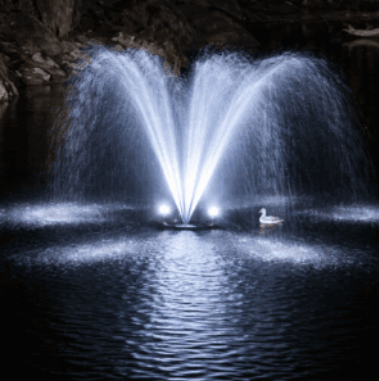
Floating pond fountains are water features designed to remain on the pond surface while a pump draws water upward and pushes it through a nozzle. The water is then projected above the surface before falling back into the pond. Depending on the equipment and nozzle configuration, the spray can form different patterns and heights.
Choosing the Right Fountain Size and Spray Pattern
Selecting a fountain involves more than choosing the largest spray pattern available. Pond surface area, water depth, pump capacity, electrical requirements, intended operating schedule, and desired spray height all affect suitability.
A larger pond may require equipment capable of moving an appropriate volume of water, while a smaller ornamental pond may need a more compact system. Spray patterns should also be considered in relation to the pond’s surroundings. Excessively high spray can create unwanted wind drift, while a lower pattern may provide more controlled water movement.
Can Floating Fountains Help With Pond Water Quality?
Water circulation can support several aspects of pond management, but it should be viewed as one component of a larger approach. Oxygen availability is particularly important because fish, aquatic organisms, and aerobic microorganisms depend on dissolved oxygen.
Pond fountains floating at the surface can therefore contribute to oxygen exchange and surface movement, particularly in suitable pond conditions. However, they cannot eliminate problems caused by excessive nutrients, heavy organic accumulation, poor watershed management, or inadequate deep-water circulation.
Should Pond Fountains Be Used for Deep Ponds?
Depth is an important consideration when selecting an aeration or circulation method. Surface fountains primarily affect upper water layers, while deeper ponds can develop temperature and oxygen differences between surface and bottom water.
Consequently, pond fountains floating on the surface may work well as part of a surface-water strategy but may not replace a dedicated deep-water aeration system where substantial bottom circulation is required.
How Lighting Changes a Floating Fountain
Lighting adds another dimension to a fountain by making water movement visible after sunset. Properly designed pond fountains floating on the surface can illuminate spray patterns, highlight water movement, and make the fountain easier to see at night.
LED lighting is commonly used because it can provide concentrated illumination while integrating with fountain equipment. The placement and intensity of lighting should be appropriate for the fountain’s spray height and surrounding environment.
Maintenance Considerations for Floating Pond Fountains
Routine maintenance helps keep fountain equipment operating reliably. Pump intakes should be checked for leaves, algae, and other debris that could restrict water flow. Nozzles may also require cleaning if mineral deposits or organic material interfere with the spray pattern.
Water levels should be monitored because significant evaporation or water loss can affect equipment operation. Electrical components should be inspected according to the manufacturer’s requirements, particularly where equipment operates outdoors and around water.
Conclusion
Floating fountains can combine visible water movement with useful surface aeration, making them relevant to ponds where circulation and presentation are both considerations. They can support oxygen exchange and reduce stagnant surface conditions, but they should not be viewed as a universal solution for deep-water oxygen problems or nutrient-driven algae growth.
For nighttime visibility and landscape presentation, floating fountain lights can further enhance the fountain by highlighting spray patterns and water movement after dark. Ultimately, selecting the appropriate fountain requires considering the pond as a complete system, including its depth, nutrient inputs, biological activity, circulation requirements, and ongoing maintenance needs.
Author

