





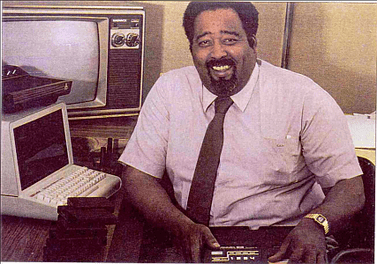
Jerry Lawson Biography – The Man Who Changed Home Gaming Forever
Jerry Lawson stands as one of the most influential yet often underappreciated innovators in American technology history. His work reshaped how families interact with entertainment, laying the groundwork for the modern video game industry as we know it today. At a time when home consoles were limited, rigid, and short-lived, he introduced a revolutionary idea that forever altered gaming culture: interchangeable game cartridges. This biography explores his life, achievements, struggles, values, and long-lasting impact, presented in a clear, engaging, and fully original format designed for readers in the United States.
Contents
- Early Life and Family Background of Jerry Lawson
- Personal Profile (Quick Facts)
- Career Breakthroughs of Jerry Lawson
- The Fairchild Channel F Revolution
- Leadership Style and Engineering Philosophy
- Personal Life, Interests, and Values
- Challenges and Industry Struggles
- Legacy and Cultural Impact of Jerry Lawson
- Awards, Recognition, and Honors
- Educational Influence and Inspiration
- Timeline of Major Life Events
- Why His Story Still Matters Today
- Conclusion
- Author
Early Life and Family Background of Jerry Lawson
Born on December 1, 1940, in Queens, New York, Jerry Lawson grew up in a household that valued curiosity, learning, and problem-solving. His parents encouraged hands-on exploration, which played a major role in shaping his interest in electronics from a very young age.
As a teenager, he was already repairing televisions, building radios, and experimenting with early electronic components. One of his most remarkable early achievements was constructing his own arcade-style coin-operated game in his garage—long before video gaming was considered a viable career path.
His educational journey included studying at Queens College and City College of New York. Although he did not complete a formal degree, his practical knowledge, self-learning habits, and technical intuition proved far more valuable than traditional credentials.
Personal Profile (Quick Facts)
| Category | Details |
|---|---|
| Full Name | Gerald Anderson Lawson |
| Date of Birth | December 1, 1940 |
| Place of Birth | Queens, New York, USA |
| Nationality | American |
| Profession | Electronics Engineer, Video Game Pioneer |
| Known For | Cartridge-based home gaming system |
| Industry | Consumer Electronics, Gaming |
| Years Active | 1970s – 1990s |
| Date of Death | April 9, 2011 |
Career Breakthroughs of Jerry Lawson
The turning point in his professional life came when he joined Fairchild Semiconductor in the early 1970s. At that time, Fairchild was a major force in electronics and computing, but the home gaming market was still experimental and unstructured.
He was appointed as the lead engineer and project manager for a new console concept. Unlike existing systems that had games permanently built into the hardware, he envisioned something far more flexible: removable cartridges that could store different games.
This idea was not just innovative—it was risky. Cartridge-based systems required precise engineering, cost-efficient manufacturing, and durability for home use. Many believed it would fail. He proved them wrong.
The Fairchild Channel F Revolution
In 1976, Fairchild released the Channel F console—the first home gaming system to use interchangeable cartridges. This invention allowed users to buy new games without replacing the entire console, a concept that became the industry standard.
Why This Innovation Mattered
-
Extended console lifespan
-
Reduced cost for consumers
-
Enabled third-party game development
-
Encouraged creativity and competition
-
Laid the foundation for future systems like Atari, Nintendo, and Sega
Without this leap forward, modern gaming ecosystems might never have developed in the same way.
Leadership Style and Engineering Philosophy
Unlike many engineers of his time, he believed in collaborative problem-solving. He valued diversity in thought, creativity, and practical experience. His leadership style was calm, methodical, and inclusive.
He was also a member of the Homebrew Computer Club, a legendary group that included future tech icons such as Steve Jobs and Steve Wozniak. His presence in the club reflected his deep involvement in the early personal computing movement.
Personal Life, Interests, and Values
Outside of work, he was known as a warm, thoughtful individual who enjoyed mentoring younger engineers. He believed strongly in education through experimentation rather than memorization.
Favorite Things and Personal Interests
| Category | Preferences |
|---|---|
| Favorite Color | Blue |
| Favorite Hobby | Tinkering with electronics |
| Favorite Music Era | Jazz & Classic R&B |
| Favorite Activity | Teaching and mentoring |
| Personality Traits | Patient, inventive, humble |
Family remained central to his life, and he often spoke about the importance of balancing professional ambition with personal responsibility.
Challenges and Industry Struggles
Despite his groundbreaking contributions, he faced numerous challenges throughout his career. Racial barriers in the tech industry during the 1970s limited recognition and advancement opportunities. Additionally, Fairchild Semiconductor eventually shifted focus away from consumer gaming, leading to the Channel F’s decline.
Later ventures, including his own company focused on game development and consulting, struggled due to market saturation and rapid technological changes. Even so, he remained resilient and committed to innovation.
Legacy and Cultural Impact of Jerry Lawson
Today, his influence is deeply embedded in every modern gaming console. Cartridge-based systems dominated the industry for decades, and even today’s digital game libraries follow the same core principle: modular, expandable content.
His legacy is not just technical—it is cultural. He proved that innovation can come from anywhere and that determination matters more than recognition.
Awards, Recognition, and Honors
Although recognition came later in life, his contributions were eventually acknowledged by major institutions.
-
Inducted into the International Center for the History of Electronic Games
-
Honored by the Computer History Museum
-
Featured in educational programs highlighting diversity in STEM
-
Google Doodle tribute celebrating his birthday
These honors solidified his place as a foundational figure in American technology history.
Educational Influence and Inspiration
Today, his story is frequently used in schools and universities to inspire students interested in engineering, game design, and entrepreneurship. His journey demonstrates that formal limitations do not define potential.
Many diversity-focused STEM programs cite his achievements as proof that representation and opportunity can reshape entire industries.
Timeline of Major Life Events
| Year | Milestone |
|---|---|
| 1940 | Born in Queens, New York |
| 1960s | Early electronics experiments |
| 1970 | Joined Fairchild Semiconductor |
| 1976 | Channel F console released |
| 1980s | Independent consulting work |
| 2011 | Passed away, legacy honored |
Why His Story Still Matters Today
In an era driven by innovation, scalability, and user experience, his work remains highly relevant. The concept of reusable hardware with interchangeable content is still central to modern technology—from gaming consoles to smartphones and software platforms.
His life reminds us that true innovation is not just about technology, but about vision, courage, and persistence.
Conclusion
The story of Jerry Lawson is one of brilliance, resilience, and quiet revolution. His work transformed home entertainment and laid the groundwork for an industry worth hundreds of billions of dollars today. More importantly, his journey continues to inspire future generations of creators, engineers, and dreamers across the United States and beyond.
Author

