




How to Choose the Right NEMA Enclosure Types for Your Application
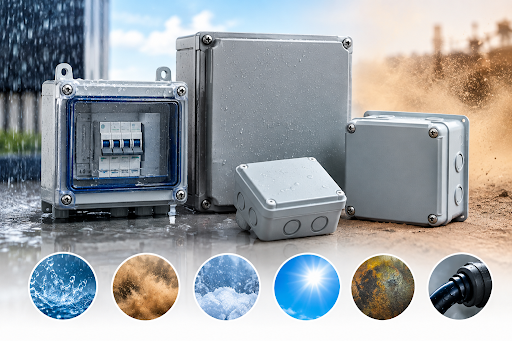
Electrical enclosures play an important role in protecting control panels, wiring, switches, and other electrical components from environmental hazards. Depending on the installation, these hazards may include dust, moisture, rain, oil, corrosive substances, and accidental contact. Selecting an enclosure with suitable protective characteristics helps maintain equipment reliability and supports safer operation in industrial, commercial, and outdoor environments.
Understanding NEMA enclosure types is an essential part of this selection process. These classifications describe the environmental conditions an enclosure is designed to withstand, allowing engineers, facility managers, and equipment designers to match enclosure protection to the demands of a particular location. Choosing correctly requires evaluating the surroundings, equipment requirements, and applicable safety standards.
Understanding NEMA Ratings
The National Electrical Manufacturers Association (NEMA) establishes enclosure classifications through standards that describe protection against specified environmental conditions. These ratings consider factors such as falling dirt, airborne dust, water exposure, corrosion, and external ice formation.
A rating should not be interpreted as a simple numerical ranking in which a higher number automatically provides better protection. Each classification addresses particular conditions, so the appropriate choice depends on the actual installation environment.
For example, an enclosure designed for a clean indoor electrical room may not provide sufficient protection in a manufacturing facility where equipment encounters oil or frequent water splashes. Reviewing the rating requirements before purchasing equipment helps prevent unsuitable selections and unnecessary expenditure. <Cite refs={[“turn724048search12″,”turn724048search1”]}/>
Common Enclosure Types and Their Applications
Several classifications are frequently used across industrial and commercial applications.
Type 1: Designed primarily for indoor environments, Type 1 enclosures provide protection against incidental contact with enclosed equipment and limited amounts of falling dirt. They are commonly suitable for clean, dry areas where exposure to liquids is not expected.
Type 3R: This classification is commonly used for outdoor electrical installations requiring protection against falling rain, sleet, and external ice formation. It is frequently considered for outdoor electrical distribution equipment and junction boxes.
Type 4: Type 4 enclosures provide protection against windblown dust, rain, splashing water, and hose-directed water. They may be appropriate for indoor or outdoor environments where more substantial protection against water exposure is necessary.
Type 4X: In addition to the environmental protection associated with Type 4, Type 4X provides additional corrosion resistance. This makes it a potential choice for coastal facilities, food-processing environments, and other locations where corrosive conditions are a concern.
Type 12: Intended primarily for indoor industrial use, Type 12 enclosures provide protection against circulating dust, falling dirt, dripping liquids, and light splashing. They are often considered for manufacturing equipment and industrial control panels.
The distinctions between these classifications are important because environmental exposure varies considerably between facilities. <Cite refs={[“turn724048search0″,”turn724048search6”]}/>
Assessing Environmental Conditions
Before choosing an enclosure, identify the hazards present at the installation site. Indoor locations may involve dust, lint, oil, condensation, or occasional liquid splashes. Outdoor installations may face rain, snow, windblown particles, temperature changes, and corrosive atmospheric conditions.
Facilities near coastal areas may require additional attention to salt exposure, while manufacturing plants may need protection against oils or process-related contaminants. Washdown areas require careful assessment of water exposure and cleaning procedures.
When evaluating NEMA enclosure types, consider both normal operating conditions and reasonably foreseeable environmental challenges. Equipment installed near machinery may experience vibration, while outdoor enclosures may be exposed to changing weather throughout the year.
Installation and Maintenance Considerations
Even an appropriately rated enclosure can underperform if it is installed incorrectly. Cable entries, conduit openings, mounting arrangements, door seals, and accessories must be compatible with the intended protection level.
Any modifications should follow the manufacturer’s instructions and preserve the enclosure’s required performance. Poorly fitted seals or unsuitable cable glands can create openings that allow moisture or contaminants to enter.
Routine inspections help identify damaged gaskets, loose hardware, corrosion, and other signs of deterioration. Cleaning and maintenance schedules should reflect the operating environment and equipment requirements.
Conclusion
Selecting the appropriate electrical enclosure involves balancing environmental protection, material performance, installation requirements, and long-term maintenance. When comparing NEMA enclosures, understanding the distinctions between ratings and matching them to actual site conditions provides a sound foundation for making informed equipment decisions.
Author

