



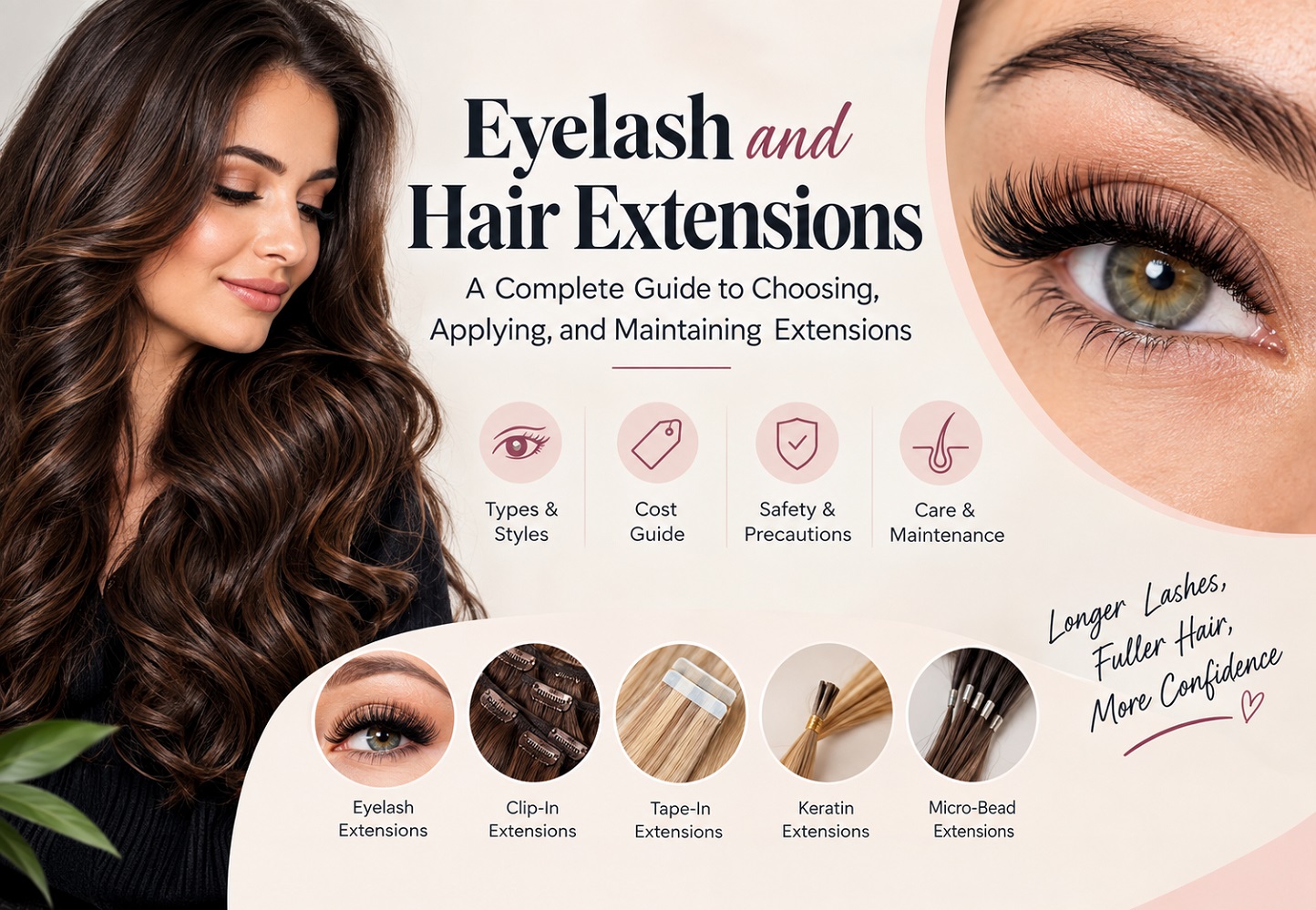
Eyelash and Hair Extensions: A Complete Guide to Choosing, Applying, and Maintaining Extensions
Eyelash and hair extensions can change your appearance dramatically without requiring a completely different beauty routine. Hair extensions can add length, volume, or color, while eyelash extensions can make the eyes look more defined even when you are wearing little or no makeup.
But good results depend on much more than choosing a style you like in a photograph. The extension type, weight, attachment method, application technique, maintenance routine, and condition of your natural hair or lashes all affect the final result.
That is especially important because extensions are attached to your existing hair or eyelashes. Poorly selected or excessively heavy extensions can create unnecessary stress, while improper hygiene or removal can lead to irritation, breakage, or other problems.
This guide explains how eyelash and hair extensions work, the major types available, what they cost, how long they last, how to care for them, and how to choose a professional who prioritizes both appearance and safety.
What Are Eyelash and Hair Extensions?
Eyelash and hair extensions are cosmetic additions attached to existing natural lashes or hair to change their length, thickness, volume, or appearance.
Although they fall under the same general beauty category, the two services are very different.
Eyelash extensions are individual synthetic, silk, or other cosmetic fibers attached to natural eyelashes using a specialized adhesive.
Hair extensions are additional strands or wefts attached to natural hair using methods such as clips, tape, keratin bonds, beads, or sewn-in techniques.
The key difference is the amount of stress involved and where the extension is placed. Eyelash extensions are applied close to a highly sensitive eye area, while hair extensions interact with the scalp, hair shaft, and follicles.
That means neither service should be treated as a simple accessory.
Eyelash Extensions Explained
Eyelash extensions are designed to create the appearance of longer, darker, thicker, or more curled natural lashes.
Instead of applying a strip across the entire eyelid, a professional lash technician generally works with individual natural lashes and selects extension lengths and curls according to the client’s eye shape and existing lash density.
Common Eyelash Extension Styles
The most popular styles include:
- Classic extensions: Usually one extension is applied to one natural lash. They provide a defined, mascara-like effect.
- Volume extensions: Several very lightweight fibers are arranged into a fan and applied to an individual natural lash.
- Hybrid extensions: A combination of classic and volume techniques for a textured appearance.
- Wispy sets: Different lengths are deliberately mixed to create a softer, less uniform appearance.
- Cat-eye styles: Longer extensions are concentrated toward the outer portion of the eye.
- Doll or open-eye styles: Greater length is placed around the center of the eye to create a more open appearance.
The best style is not necessarily the most dramatic one. A lash artist should consider the natural lash strength, eye shape, desired appearance, and how much maintenance the client is willing to perform.
How Long Do Eyelash Extensions Last?
Eyelash extensions do not remain attached permanently because your natural eyelashes naturally shed.
A set may look different after several weeks as individual natural lashes complete their growth cycle and fall out. Many clients therefore schedule maintenance appointments or fills every few weeks.
The exact schedule depends on the person’s natural lash cycle, extension technique, aftercare, sleeping habits, makeup use, and how carefully the extensions are maintained.
A professional should never promise exactly the same retention period for every client.
Are Eyelash Extensions Safe?
They can be used safely when properly applied and maintained, but the eye area requires particular care.
The U.S. Food and Drug Administration classifies false eyelashes, eyelash extensions, and their adhesives as cosmetic products and notes that the eyelid area is delicate. Irritation, allergic reactions, and eye injuries can be particularly troublesome in this area.
Ophthalmology guidance has also reported potential complications associated with eyelash extensions, including allergic eyelid inflammation, irritation of the ocular surface, conjunctival problems, and traction-related lash loss.
That does not mean everyone should avoid extensions. It means the application should be treated as a professional cosmetic procedure rather than something where heavier or more adhesive automatically means better results.
Warning Signs After Eyelash Application
Contact a healthcare professional if you experience persistent or significant:
- Eye pain
- Severe redness
- Swelling
- Burning
- Excessive tearing
- Vision changes
- Significant itching or irritation
- Symptoms that continue after stopping the cosmetic product
If an eye cosmetic causes irritation, the FDA recommends stopping its use.
Do not attempt to solve a serious reaction by adding more cosmetic products around the eye.
How to Prepare for an Eyelash Extension Appointment
Good preparation can make the appointment easier and may help the extensions adhere properly.
Before your appointment:
- Arrive with clean lashes.
- Remove mascara and heavy eye makeup.
- Avoid leaving oily skincare products around the lash line.
- Tell the technician about known cosmetic or adhesive sensitivities.
- Discuss your preferred level of drama before application begins.
- Ask what adhesive and extension materials will be used.
- Follow the technician’s specific aftercare instructions.
A professional should also assess your natural lashes rather than simply applying the longest extensions available.
Eyelash Extension Aftercare
Once you have extensions, your routine may need a few adjustments.
Keep the Lash Area Clean
A common mistake is assuming that avoiding the eye area completely will make extensions last longer.
The lash line still needs appropriate hygiene. Makeup residue, skin oils, dust, and other debris can accumulate around the lashes.
Clean gently using a product recommended for use around eyelash extensions. Avoid aggressive rubbing.
Be Careful With Makeup
Heavy waterproof eye makeup can make removal more difficult and may encourage unnecessary rubbing around the lash line.
If you use eyeliner or other eye products, remove them carefully without pulling on the extensions.
Do Not Pull or Pick
An extension that is beginning to separate can be tempting to pull.
Don’t.
Pulling can remove the natural lash attached to it. If you want the extensions removed, have them professionally removed.
Brush Gently
A clean spoolie can help keep extensions separated and organized. Brush gently rather than repeatedly pulling through the lash line.
Hair Extensions: What You Need to Know
Hair extensions are much more varied than eyelash extensions.
They can be used to:
- Add length
- Increase volume
- Create highlights without permanent coloring
- Change a hairstyle for an event
- Add fullness to thin-looking sections
- Experiment with a different appearance without cutting natural hair
The correct extension method depends on the condition of your natural hair, desired result, lifestyle, budget, and how long you want to wear the extensions.
Types of Hair Extensions
Clip-In Hair Extensions
Clip-ins are among the simplest options for occasional use.
Small wefts attach to the natural hair using clips. They can usually be removed at the end of the day.
Best for: Weddings, parties, photography, special occasions, and people who do not want permanent extensions.
Advantages:
- Easy to remove
- No salon commitment
- Reusable
- Good for temporary length and volume
Limitations:
- Must be removed regularly
- Can feel heavy if too much hair is attached
- Improper placement can create pulling
Tape-In Extensions
Tape-in extensions use thin adhesive strips to attach extension hair close to the roots.
They can create a relatively flat appearance and are often chosen by people who want extensions that blend into the natural hair.
The adhesive area needs professional maintenance as the natural hair grows.
Keratin or Fusion Extensions
Fusion extensions attach smaller sections of extension hair to natural hair using a bonding material activated through a specialized application process.
They can create a highly customized result, but the application and removal require experience.
Sew-In Extensions
Sew-in methods generally involve creating sections or braids in the natural hair and attaching wefts with thread.
They can provide a secure result, but tension is an important consideration. If the underlying hair is pulled too tightly, repeated stress may contribute to breakage or traction alopecia.
Micro-Bead or I-Tip Extensions
These extensions use small beads or similar mechanisms to attach sections of extension hair without traditional adhesive.
They can be adjusted as the hair grows, but installation needs to be precise. Excessive tension or poor placement can still damage natural hair.
Human Hair vs. Synthetic Hair Extensions
One of the biggest decisions is the type of extension hair.
Human Hair
Human hair generally offers greater styling flexibility and a more natural appearance.
Depending on the quality and treatment of the hair, it can often be washed, styled, and blended more naturally with your own hair.
However, quality varies considerably.
Synthetic Hair
Synthetic fibers can be less expensive and are available in many colors and styles.
They can work well for temporary looks, but some synthetic fibers do not respond to heat or styling in the same way as human hair.
Always check the manufacturer’s instructions before applying heat.
Can Hair Extensions Damage Natural Hair?
Yes, they can if they are too heavy, installed too tightly, worn continuously without appropriate maintenance, or handled aggressively.
The American Academy of Dermatology notes that hair extensions and weaves can contribute to hair damage and hair loss when they place repeated stress on natural hair.
This is particularly important around the hairline, where the hair may already be finer.
Understanding Traction Alopecia
Traction alopecia is hair loss caused by repeated pulling or tension on the hair and follicles.
Early warning signs can include:
- Pain or tenderness
- Stinging
- Broken hairs around the hairline
- Receding edges
- Thinning in areas under repeated tension
- Scalp irritation or crusting
The American Academy of Dermatology specifically lists hair extensions and weaves among hairstyles that can contribute to traction alopecia when they place repeated stress on the hair.
One practical rule is simple: if your extensions hurt, they are too tight.
Pain should not be accepted as part of the process.
How to Choose the Right Hair Extension Method
There is no single best extension method for everyone.
Consider these factors first:
1. Your Natural Hair Density
Fine hair generally requires lighter extension systems. Attaching too much additional weight to delicate strands can create unnecessary stress.
2. Your Daily Routine
If you exercise frequently, swim, travel often, or wash your hair regularly, some extension methods may be more convenient than others.
3. Your Desired Duration
For occasional events, clip-ins may make more sense.
For longer-term wear, professional methods such as tape-ins, fusion, sew-ins, or bead-based systems may be considered.
4. Your Styling Habits
If you frequently use heat tools, color your hair, or wear tight ponytails, discuss these habits with your stylist before choosing an extension system.
5. Your Budget
The initial price is only part of the cost.
You should also consider:
- Maintenance appointments
- Removal
- Replacement hair
- Specialized products
- Styling
- Potential repairs
A cheaper installation can become expensive if it requires frequent correction.
How to Care for Hair Extensions
Hair extensions need more deliberate care than many people expect.
Brush From the Ends Up
Do not start aggressively at the roots.
Instead:
- Separate the hair into manageable sections.
- Gently remove tangles from the ends.
- Work upward toward the attachment area.
- Support the extension area with your hand when necessary.
- Avoid pulling directly on the bonds, tapes, or attachment points.
Wash Carefully
Follow the instructions provided for your specific extension type.
Use a gentle shampoo and concentrate cleansing on the scalp rather than aggressively scrubbing the extension attachments.
Condition the lengths where appropriate, while avoiding products around attachment areas when your stylist advises against them.
Reduce Excessive Heat
Frequent high-temperature styling can weaken hair.
The American Academy of Dermatology recommends limiting heat exposure for fragile or thinning hair and using lower heat settings when styling.
This principle is especially useful when you are trying to protect both natural and extension hair.
Sleep With Care
Before bed, gently detangle the hair and consider a loose braid or another low-tension style recommended by your stylist.
Avoid sleeping with wet, tangled extensions.
How Much Do Eyelash and Hair Extensions Cost?
There is no universal price because location, salon reputation, materials, technique, stylist experience, and maintenance requirements all affect the total cost.
For eyelash extensions, the Glamour guide reviewed for this article reports prices ranging from roughly $120 to $300 for initial sets, depending on the salon and service.
Hair extension pricing can vary even more because the final cost depends on the amount and quality of hair, installation method, length, and maintenance schedule.
Instead of comparing salons only by the advertised starting price, ask:
- What is included?
- Is the consultation included?
- Is removal included?
- What is the maintenance price?
- How much extension hair is included?
- What happens if an attachment comes loose?
- Are products included?
- Is the quoted price based on short, medium, or long hair?
A $100 service and a $300 service may involve completely different amounts of hair, labor, experience, and maintenance.
How to Find a Good Extension Professional
The technician or stylist matters as much as the extension product.
Before booking, look for someone who:
- Shows clear examples of their own work
- Explains the procedure before starting
- Asks about your natural hair or lashes
- Discusses maintenance honestly
- Does not pressure you into an extremely dramatic look
- Maintains a clean working environment
- Explains aftercare
- Takes complaints about pain or irritation seriously
For eyelash extensions, hygiene and careful placement deserve particular attention because the service takes place next to the eyes.
For hair extensions, ask how the stylist prevents excessive tension and how often the method should be adjusted or removed.
Red Flags You Should Not Ignore
Walk away from an extension service if the provider:
- Promises that extensions can never damage natural hair or lashes
- Uses excessive glue
- Ignores discomfort
- Cannot explain the products being used
- Reuses materials that should be disposable
- Does not discuss aftercare
- Encourages you to remove professional extensions yourself
- Wants to apply unusually heavy extensions to weak natural hair or lashes
- Dismisses redness, pain, swelling, or other warning signs
A good professional should care about the condition of your natural hair and lashes, not just the appearance immediately after the appointment.
Eyelash and Hair Extensions for Special Events
Extensions can make sense when you have a specific event in mind.
For weddings, photoshoots, vacations, graduations, and other major occasions, schedule the first trial early enough to discover whether the style works for you.
Do not make your first-ever extension appointment the day before a major event.
A trial gives you time to discover:
- Whether you like the length
- Whether the style suits your face
- Whether the weight feels comfortable
- Whether you react to any products
- How much maintenance you are willing to do
- Whether you prefer a softer or more dramatic appearance
For eyelash extensions especially, a trial is useful because the finished appearance can be very different from what you imagined from an online photograph.
Can You Wear Eyelash and Hair Extensions at the Same Time?
Yes. There is nothing inherently unusual about combining the two services.
The important point is to treat them as separate procedures with separate maintenance needs.
For example, someone preparing for a wedding might choose:
- Natural-looking volume lashes
- Medium-length human hair extensions
- A low-maintenance hairstyle
- Minimal additional eye makeup
The goal should be balance. Extremely long lashes combined with very long, heavy hair extensions may create a dramatically different look from what someone expects.
A skilled stylist can help coordinate the overall result.
Common Mistakes People Make With Extensions
Choosing the Longest Option
Longer does not automatically mean better.
The extension must be appropriate for the strength and density of the natural hair or lashes.
Ignoring Maintenance
Extensions are not a one-time purchase. They require care, adjustments, fills, removal, or replacement depending on the method.
Using Too Much Heat
Repeated heat can weaken both natural hair and extension hair.
Pulling at Loose Extensions
A loose extension may feel annoying, but pulling it out can take natural hair or lashes with it.
Copying Someone Else’s Style
A style that looks excellent on one person may not suit another person’s eye shape, hair density, face shape, or lifestyle.
Selecting a Salon Only by Price
The cheapest option is rarely the best measure of value when a service involves your eyes, scalp, or natural hair.
A Practical Checklist Before Your Appointment
Save this checklist before booking:
For eyelash extensions
-
Check the technician’s portfolio
-
Ask about the extension material
-
Discuss curl, length, and density
-
Mention allergies or previous reactions
-
Arrive with clean lashes
-
Ask about aftercare
-
Never tolerate significant pain
For hair extensions
-
Have your natural hair assessed
-
Discuss the total weight
-
Choose an appropriate attachment method
-
Ask about maintenance intervals
-
Understand removal costs
-
Ask how to wash and brush the extensions
-
Discuss heat styling
-
Report pain or scalp irritation immediately
The Bottom Line for Long-Term Extension Wear
Eyelash and hair extensions work best when they complement your natural features instead of overpowering them.
For lashes, that means selecting extensions that your natural eyelashes can comfortably support and having them applied with appropriate hygiene and technique.
For hair, it means choosing an attachment method that fits your hair density and lifestyle while minimizing repeated tension.
The most attractive result is rarely the heaviest or longest option. It is the one that looks intentional, feels comfortable, fits your routine, and leaves your natural hair and lashes in good condition.
If you are considering extensions for the first time, start conservatively. You can always go longer, fuller, or more dramatic at a later appointment. Protecting your natural hair and lashes gives you far more flexibility in the long run.
Author

