




Essential Tools for Wood Sculpture Projects and Artistic Carving
Wood sculpture is an art form that combines creativity, craftsmanship, and a deep understanding of natural materials. From abstract forms to detailed figures and decorative pieces, sculptors use different techniques to transform raw wood into expressive works of art. While artistic vision plays an important role, having the right equipment can significantly influence the carving process, level of detail, and overall finish. Choosing the right tools for wood sculpture allows artists to shape materials efficiently while maintaining control over their creative process.
Modern wood sculpting combines traditional hand-carving methods with advanced power carving techniques. This combination gives artists more flexibility when creating detailed textures, organic shapes, and complex three-dimensional forms. Power carving tools, in particular, have become increasingly popular because they help speed up material removal while allowing sculptors to explore unique designs.
Contents
- Understanding the Basics of Wood Sculpture
- Types of Tools Used for Wood Sculpture
- Hand Carving Tools
- Power Carving Tools for Sculptural Work
- Choosing the Right Tool for Different Sculpture Stages
- Rough Shaping Stage
- Form Development Stage
- Detail and Finishing Stage
- Factors to Consider When Selecting Wood Sculpture Tools
- The Role of Texture in Wood Sculpture
- Safety Considerations When Using Carving Equipment
- Combining Traditional and Modern Carving Techniques
- Maintaining Wood Sculpture Equipment
- Conclusion
- Author
Understanding the Basics of Wood Sculpture
Wood sculpture involves removing material from a block, log, or piece of wood to reveal a desired shape. Unlike woodworking projects that often follow precise measurements, sculpture focuses more on form, movement, texture, and artistic expression.
The process usually includes several stages:
- Planning the design
- Selecting suitable wood
- Rough shaping
- Refining details
- Adding texture
- Sanding and finishing
Each stage requires different techniques and equipment. A beginner working on small projects may need only basic hand tools, while larger sculptures often require specialized power equipment for efficient shaping.
Types of Tools Used for Wood Sculpture
Different carving methods require different types of equipment. Understanding the purpose of each tool helps sculptors select the right option for their projects.
Hand Carving Tools
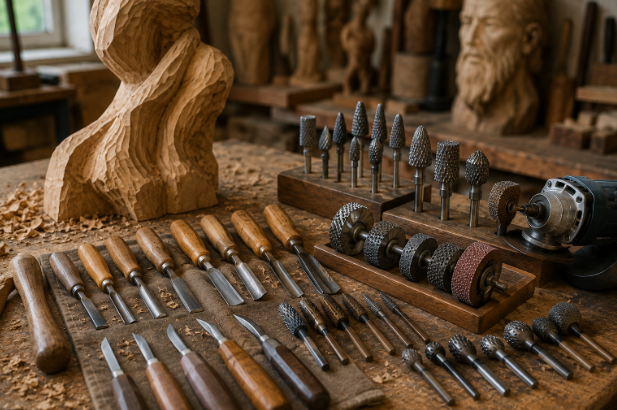
Traditional hand tools remain an important part of wood sculpture. They provide precision and allow artists to make controlled adjustments during detailed work.
Common hand-carving tools include:
Carving Knives
Carving knives are often used for smaller details, shaping edges, and refining surfaces. They provide direct control and are commonly used in traditional carving techniques.
Chisels and Gouges
Chisels and gouges help remove wood and create specific shapes. Different profiles allow artists to carve curves, grooves, and textured surfaces.
Rasps and Files
Rasps are useful for smoothing rough areas and refining shapes after larger pieces of material have been removed. They provide a balance between aggressive shaping and detailed finishing.
While hand tools remain valuable, many modern sculptors combine them with power carving equipment to improve efficiency.
Power Carving Tools for Sculptural Work
Power carving has changed how many artists approach wood sculpture. These tools allow faster material removal while maintaining the ability to create detailed artistic forms.
Kutzall’s sculptural art collection includes power carving options such as shaping wheels, burrs, contour wheels, and hand rasps designed for creating organic forms, textures, and dimensional artwork.
Important power carving tools include:
Rotary Burrs
Rotary burrs are commonly used for detailed shaping, texture creation, and refining smaller areas. They can help artists create intricate patterns and surface effects.
Shaping Wheels
Shaping wheels are useful for removing larger amounts of material quickly. They are often used during the early stages of sculpture when artists are establishing the overall form.
Contour Wheels
Contour wheels help create curved surfaces, recessed areas, and flowing transitions. They are useful when sculptors want smoother organic shapes.
Choosing the Right Tool for Different Sculpture Stages
The right tool depends largely on the stage of the project.
Rough Shaping Stage
During the early stage, sculptors need tools that can remove material quickly and efficiently. Larger power carving tools are often useful because they help establish the basic shape of the sculpture.
The focus at this stage is:
- Creating proportions
- Removing excess material
- Developing the overall silhouette
Form Development Stage
Once the basic shape is created, artists begin refining curves, surfaces, and transitions. Medium-sized tools allow more control while maintaining efficiency.
This stage focuses on:
- Improving contours
- Creating depth
- Adjusting proportions
Detail and Finishing Stage
The final stage requires precision. Smaller burrs, rasps, and hand tools help add textures, smooth transitions, and refine artistic details.
Factors to Consider When Selecting Wood Sculpture Tools
Choosing equipment requires considering several factors beyond the type of sculpture being created.
Type of Wood
Different woods have different densities and grain patterns. Softer woods may require different approaches compared with hardwoods.
Sculpture Size
Large sculptures often require tools designed for faster material removal, while smaller pieces may benefit from detailed carving equipment.
Desired Finish
Artists creating smooth surfaces may need different tools compared with those producing textured or rustic finishes.
Experience Level
Beginners may prefer versatile tools that allow them to learn different techniques before investing in specialized equipment.
The Role of Texture in Wood Sculpture
Texture plays an important role in how viewers experience a wooden sculpture. Surface details can create visual interest and highlight the natural character of the material.
Artists use tools to create:
- Organic patterns
- Rough textures
- Smooth transitions
- Decorative details
- Surface contrasts
Power carving equipment allows sculptors to experiment with different textures while maintaining control over the final appearance.
Safety Considerations When Using Carving Equipment
Working with carving tools requires proper safety practices. Both hand tools and power tools should be used carefully to reduce the risk of injury.
Important safety practices include:
- Wearing protective eyewear
- Using dust protection
- Maintaining sharp and properly functioning tools
- Securing the workpiece
- Following manufacturer instructions
A clean and organized workspace also helps improve control and accuracy during carving.
Combining Traditional and Modern Carving Techniques
Many contemporary sculptors combine traditional hand carving with modern power tools. This approach allows artists to benefit from both speed and precision.
Power tools can help with:
- Faster shaping
- Creating large forms
- Developing textures
Hand tools can help with:
- Fine details
- Controlled adjustments
- Final refinements
This combination provides artists with greater creative flexibility.
Maintaining Wood Sculpture Equipment
Proper maintenance helps ensure tools remain effective and safe.
General maintenance practices include:
- Cleaning tools after use
- Checking cutting surfaces regularly
- Storing equipment properly
- Replacing worn components when needed
Well-maintained equipment provides better performance and allows artists to focus more on creativity.
Conclusion
Creating wooden artwork requires a combination of imagination, skill, and reliable equipment. Whether using traditional carving methods or modern power techniques, selecting suitable sculpture tools allows artists to explore new textures, forms, and artistic possibilities while developing their own unique carving style. The right tools for wood sculpture help artists move from rough material to finished artwork by supporting every stage of the creative process, from shaping large forms to refining intricate details.
Author

