




Podocarpus Gracilior: An Evergreen Choice for Privacy and Landscape Design
Creating an attractive landscape involves choosing plants that provide year-round greenery, complement the property’s design, and suit the local growing conditions. Evergreen trees and hedges are especially useful because they maintain their foliage throughout the year, offering consistent structure and visual interest. Podocarpus Gracilior, also known as fern pine or weeping podocarpus, is valued for its fine green foliage, graceful growth habit, and versatility in residential and commercial landscapes. It can be grown as a specimen tree, shaped into a formal hedge, or planted in rows to create a natural screen. Understanding its growing requirements helps you determine whether this evergreen is right for your outdoor space.
What Makes Podocarpus Gracilior Suitable for Landscaping?
This evergreen tree has narrow leaves and gently drooping branch tips that create a soft, refined appearance. Unlike plants with broad, dense foliage, its delicate texture adds visual depth without making a landscape feel overly heavy.
Its upright growth and ability to respond well to pruning make it suitable for different design styles. In residential gardens, it can frame entrances, define property boundaries, or provide screening around patios. Commercial properties can use it to create orderly green borders around buildings, walkways, and parking areas.
When left to develop naturally, the tree can become a substantial landscape feature. Regular pruning allows it to maintain a more controlled shape, making it adaptable to different planting objectives.
Using Evergreen Hedges to Improve Privacy
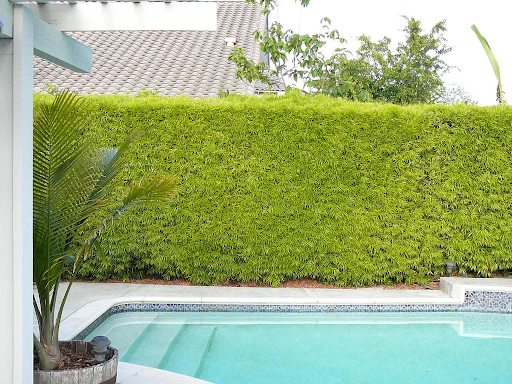
Privacy planting can make outdoor spaces feel more comfortable while adding natural structure to the property. Podocarpus Gracilior works well as a hedge or screen because its foliage can form a dense green barrier when plants are established and maintained appropriately.
Before planting, consider the height and width of the screen you want to create. Allow enough room for mature growth and access for trimming. Spacing plants too closely may increase competition, while excessive spacing can delay the formation of a continuous hedge.
For a formal appearance, consistent trimming helps maintain a uniform outline. For a softer landscape, plants can be allowed to retain more of their natural shape. The best approach depends on the available space, desired privacy, and amount of maintenance you can provide.
Sunlight, Soil, and Watering Requirements
Choosing the right planting location is essential for healthy growth. Fern pine generally performs well in full sun to partial shade, although the amount of sunlight can influence its growth and overall appearance.
Well-draining soil is particularly important. Poor drainage can leave roots exposed to excessive moisture and increase the risk of root problems. Before planting, assess the soil and improve drainage where necessary.
Water regularly while newly planted trees establish their root systems. Once established, they can tolerate periods of dry weather better than many less drought-tolerant plants. However, watering requirements still depend on temperature, soil conditions, rainfall, and the plant’s location.
Applying a layer of mulch around the root zone can help conserve soil moisture and reduce weed growth. Keep mulch away from direct contact with the trunk to reduce moisture-related problems.
Pruning and Long-Term Maintenance
Regular maintenance helps preserve the shape, health, and function of an evergreen tree. If you are growing a formal hedge, trim it as needed to maintain the desired height and density. Avoid removing excessive foliage at once, particularly when shaping established plants.
For specimen trees, selective pruning can remove damaged branches and maintain a balanced structure. As the tree matures, lower branches may droop, so consider nearby walkways, driveways, and visibility when planning its location.
Monitor the foliage for unusual discolouration, distorted new growth, or other signs of stress. Check watering practices and drainage if the plant begins to decline. Routine observation can help you identify potential issues before they become more difficult to manage.
Conclusion
Choosing an evergreen for your landscape means balancing appearance, mature size, growing conditions, and ongoing care. Plant Clearance offers Podocarpus Gracilior trees and hedge plants in different sizes, helping homeowners and landscape professionals explore options for privacy screening, garden design, and property landscaping. With suitable sunlight, well-draining soil, thoughtful placement, and regular maintenance, fern pine can provide lasting structure and attractive greenery in many landscapes.
Author

