



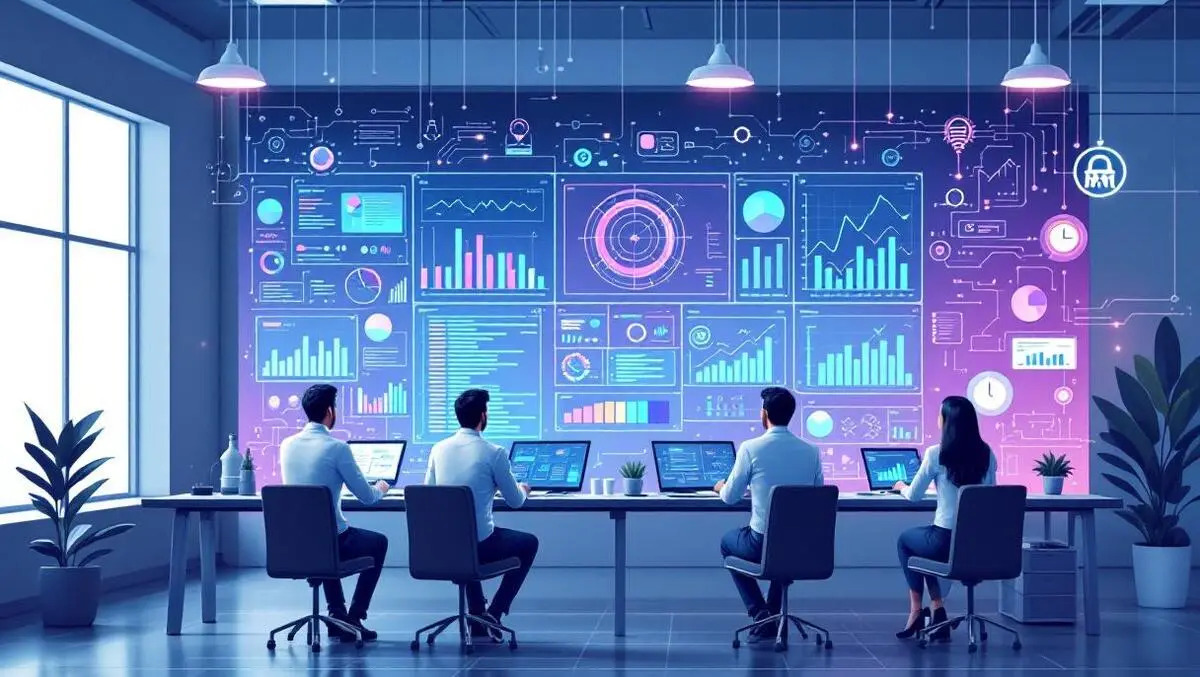
Top 10 Business Trends in 2026
The global business landscape is evolving faster than ever before. Rapid technological innovation, shifting workforce expectations, environmental concerns, and economic uncertainties are forcing organizations to rethink traditional strategies. Companies that once relied on long-term stability must now operate in a world defined by agility, digital transformation, and constant disruption.
In 2026, businesses are not just adopting new technologies—they are redesigning how work gets done, how customers interact with brands, and how companies measure success. Artificial intelligence, sustainability, hybrid work models, and new digital ecosystems are reshaping industries from startups to multinational corporations.
This article explores the Top 10 Business Trends in 2026 that are influencing how companies operate, compete, and grow in the modern economy.
Contents
- 1. Artificial Intelligence Becomes the Core of Business Operations
- 2. Hybrid Work Becomes the Permanent Workplace Model
- 3. Sustainability Becomes a Core Business Strategy
- 4. Industry-Specific Cloud Platforms Replace Generic Systems
- 5. Digital Twins Transform Business Decision-Making
- 6. Cybersecurity and Zero-Trust Architecture Become Critical
- 7. Data-Driven Decision Making Becomes the Norm
- 8. The Rise of the Skills-Based Workforce
- 9. Extended Reality (XR) Enters the Business Mainstream
- 10. Business Agility Becomes the Ultimate Competitive Advantage
- FAQs: Business Trends in 2026
- 1. What are the biggest business trends in 2026?
- 2. Why are business trends important for companies?
- 3. How is artificial intelligence changing businesses in 2026?
- 4. What role does digital transformation play in modern businesses?
- 5. How is hybrid work shaping the future workplace?
- 6. Why is sustainability becoming important for businesses?
- 7. How can small businesses benefit from emerging business trends?
- 8. What technologies will shape the future of business?
- 9. How can companies prepare for future business trends?
- 10. Will technology replace human jobs in the future?
- Author
1. Artificial Intelligence Becomes the Core of Business Operations
Artificial Intelligence (AI) has moved beyond experimentation and into the core of business strategy. In 2026, AI is no longer simply a tool used by IT departments; it has become an operational backbone across departments such as marketing, finance, logistics, customer service, and human resources.
One of the most significant developments is the rise of AI agents and AI copilots, which assist employees with complex tasks. These intelligent systems can analyze large datasets, automate workflows, write reports, and even manage entire business processes with minimal human intervention.
For example, companies now use AI to:
-
Predict customer behavior
-
Automate financial reporting
-
Optimize supply chains
-
Generate marketing campaigns
-
Improve decision-making through real-time analytics
Studies show that AI adoption can significantly increase productivity and reduce operational costs for businesses.
However, the real impact of AI lies in human-AI collaboration. Instead of replacing workers, AI systems are becoming digital partners that handle repetitive tasks while humans focus on strategy, creativity, and problem-solving.
Companies that successfully integrate AI into their operations will gain a major competitive advantage in the coming years
Read More : Turmeric and Kojic Soap: The Ultimate Duo for Brighter, Clearer Skin
2. Hybrid Work Becomes the Permanent Workplace Model
The pandemic accelerated the shift toward remote work, but by 2026 businesses have settled into a more balanced hybrid work model. Employees split their time between remote locations and physical offices, combining flexibility with in-person collaboration.
Many companies initially believed that fully remote work would dominate the future, but experience has shown that employees still value in-person interactions for mentorship, teamwork, and innovation. Younger workers in particular increasingly seek opportunities to connect and learn directly from colleagues.
As a result, organizations are redesigning workplaces to support hybrid collaboration. Offices are evolving into:
-
Collaboration hubs rather than daily workspaces
-
Training and innovation centers
-
Networking and culture-building environments
Meanwhile, digital collaboration tools—such as project management platforms, virtual meeting software, and AI scheduling assistants—allow teams to remain productive regardless of location.
Hybrid work is now considered a long-term structural change in business, not a temporary solution.
3. Sustainability Becomes a Core Business Strategy
In 2026, sustainability is no longer simply a corporate social responsibility initiative—it has become a key business strategy. Governments, investors, and consumers are increasingly demanding transparency regarding environmental and social impact.
Companies are responding by integrating sustainability into every aspect of operations, including:
-
Supply chain management
-
Product design
-
Energy usage
-
Manufacturing processes
-
Corporate governance
Many organizations are adopting green technology and carbon-reduction strategies to meet global climate goals. Regulations in many regions now require businesses to provide detailed sustainability reporting, pushing companies to monitor and reduce environmental impact more effectively.
Sustainability also creates competitive advantages. Businesses that adopt eco-friendly practices often gain stronger customer loyalty and access to new investment opportunities.
The shift toward “green by design” business models will continue shaping industries in the next decade.
4. Industry-Specific Cloud Platforms Replace Generic Systems
Cloud computing has been widely adopted over the past decade, but 2026 marks the rise of industry-specific cloud platforms
Read More : Self-Hosting: The Ultimate Guide to Hosting Your Own Website or App in 2025
Traditional cloud platforms provide general infrastructure and tools. However, modern businesses require more specialized solutions tailored to the needs of specific sectors such as healthcare, finance, retail, or manufacturing.
Industry cloud platforms provide:
-
Pre-configured compliance systems
-
Sector-specific data models
-
Integrated applications designed for industry workflows
This approach significantly reduces implementation time and helps companies accelerate digital transformation. Analysts predict that a large majority of enterprises will adopt industry cloud platforms in the near future.
For businesses, the result is faster innovation and improved operational efficiency.
5. Digital Twins Transform Business Decision-Making
Digital twins are rapidly becoming one of the most powerful technologies in business operations.
A digital twin is a virtual representation of a physical system, process, or organization that allows businesses to simulate real-world scenarios before implementing changes.
For example, companies can use digital twins to:
-
Test new manufacturing processes
-
Simulate supply chain disruptions
-
Predict equipment failures
-
Model customer behavior
By analyzing real-time data and running simulations, businesses can make decisions with much greater accuracy and reduced risk.
Digital twins are already widely used in industries such as manufacturing, energy, logistics, and smart cities. In the future, they may become a standard tool for strategic planning across all sectors.
6. Cybersecurity and Zero-Trust Architecture Become Critical
As businesses become more digital and connected, cybersecurity threats continue to grow in complexity.
In 2026, organizations are adopting Zero-Trust security models, which assume that no user or device can be automatically trusted—even within the corporate network.
This approach requires:
-
Continuous identity verification
-
Strict access controls
-
Real-time monitoring of data usage
The rise of remote work, cloud computing, and connected devices has increased the attack surface for cybercriminals, making advanced security frameworks essential.
Businesses are also investing heavily in cybersecurity talent and AI-powered security systems to detect threats before they cause damage.
7. Data-Driven Decision Making Becomes the Norm
In 2026, successful companies rely heavily on data analytics to guide business decisions.
Every customer interaction, transaction, and operational process generates valuable data. Businesses are using advanced analytics and machine learning tools to extract insights from this information.
Data-driven organizations can:
-
Identify emerging market trends
-
Improve customer experiences
-
Optimize pricing strategies
-
Reduce operational inefficiencies
Real-time analytics and cloud-based data platforms allow leaders to make faster and more accurate decisions.
Companies that fail to embrace data-driven strategies risk falling behind competitors that can adapt quickly to changing market conditions.
8. The Rise of the Skills-Based Workforce
Traditional hiring practices based on degrees and resumes are rapidly evolving.
In 2026, companies increasingly adopt skills-based hiring, focusing on what candidates can actually do rather than their formal credentials.
Employers now use practical assessments, simulations, and task-based evaluations to measure job readiness.
This shift benefits both employers and workers:
-
Companies gain access to a broader talent pool
-
Skilled individuals without traditional degrees gain new opportunities
-
Hiring becomes more focused on real performance rather than academic history
As technology changes rapidly, continuous learning and skill development are becoming essential for both employees and organizations.
9. Extended Reality (XR) Enters the Business Mainstream
Extended Reality (XR), which includes virtual reality (VR) and augmented reality (AR), is gaining widespread adoption in business environments.
Companies are using XR technologies for:
-
Employee training simulations
-
Remote collaboration
-
Product design and prototyping
-
Customer experiences
For example, manufacturing companies use VR to train employees on complex machinery without safety risks, while retail brands use AR to allow customers to visualize products before purchasing.
As hardware becomes lighter and more affordable, XR is expected to become a common tool across industries.
10. Business Agility Becomes the Ultimate Competitive Advantage
Perhaps the most important trend shaping 2026 is the need for organizational agility.
Markets are changing faster than ever due to technological disruption, economic volatility, and shifting consumer expectations.
Companies must be able to:
-
Adapt strategies quickly
-
Experiment with new business models
-
Respond rapidly to market changes
-
Implement innovations faster than competitors
Organizations that embrace agile structures, cross-functional teams, and continuous innovation will outperform companies that remain tied to traditional hierarchical models.
In many industries, the ability to adapt quickly has become more important than size or financial resources.
Conclusion
The business world of 2026 is defined by rapid technological advancement, evolving workforce expectations, and growing environmental responsibility. Companies that succeed in this environment are those that embrace innovation while maintaining strong human-centered values.
Artificial intelligence, hybrid work, sustainability, cloud platforms, and data-driven decision-making are no longer optional strategies—they are fundamental elements of modern business success.
At the same time, businesses must focus on developing skilled employees, protecting digital infrastructure, and remaining agile in the face of constant change.
Organizations that understand and adapt to these trends will not only survive but thrive in the evolving global economy.
FAQs: Business Trends in 2026
1. What are the biggest business trends in 2026?
The biggest business trends in 2026 include artificial intelligence integration, hybrid work models, sustainability initiatives, data-driven decision making, industry-specific cloud platforms, and advanced cybersecurity strategies. These trends are reshaping how companies operate, innovate, and compete in the global market.
2. Why are business trends important for companies?
Business trends help companies understand market changes, customer behavior, and technological advancements. By following emerging trends, businesses can adapt their strategies, improve efficiency, and stay competitive in rapidly evolving industries.
3. How is artificial intelligence changing businesses in 2026?
Artificial intelligence is transforming businesses by automating repetitive tasks, analyzing large datasets, improving customer service through chatbots, and enhancing decision-making. Many companies now use AI tools for marketing automation, financial forecasting, and supply chain management.
4. What role does digital transformation play in modern businesses?
Digital transformation allows companies to integrate advanced technologies such as cloud computing, AI, and data analytics into their operations. This improves productivity, enhances customer experiences, and helps businesses remain competitive in the digital economy.
5. How is hybrid work shaping the future workplace?
Hybrid work models combine remote work and office collaboration, giving employees flexibility while maintaining productivity. Many companies in 2026 are redesigning offices to support teamwork, innovation, and employee well-being.
6. Why is sustainability becoming important for businesses?
Consumers and investors are increasingly prioritizing environmentally responsible companies. Businesses are adopting sustainable practices such as reducing carbon emissions, using renewable energy, and creating eco-friendly products to meet market expectations and regulatory requirements.
7. How can small businesses benefit from emerging business trends?
Small businesses can use emerging trends such as AI tools, cloud services, and digital marketing strategies to compete with larger companies. These technologies help reduce operational costs, improve customer engagement, and increase efficiency.
8. What technologies will shape the future of business?
Technologies such as artificial intelligence, machine learning, extended reality (XR), cloud computing, blockchain, and advanced data analytics are expected to play a major role in shaping the future of business operations.
9. How can companies prepare for future business trends?
Companies can prepare by investing in new technologies, training employees in digital skills, adopting flexible work models, and staying informed about industry developments. Continuous innovation and adaptability are key to long-term success.
10. Will technology replace human jobs in the future?
While technology will automate some tasks, it will also create new job opportunities that require creativity, problem-solving, and strategic thinking. In most industries, the future will involve collaboration between humans and intelligent technologies.
Author

